



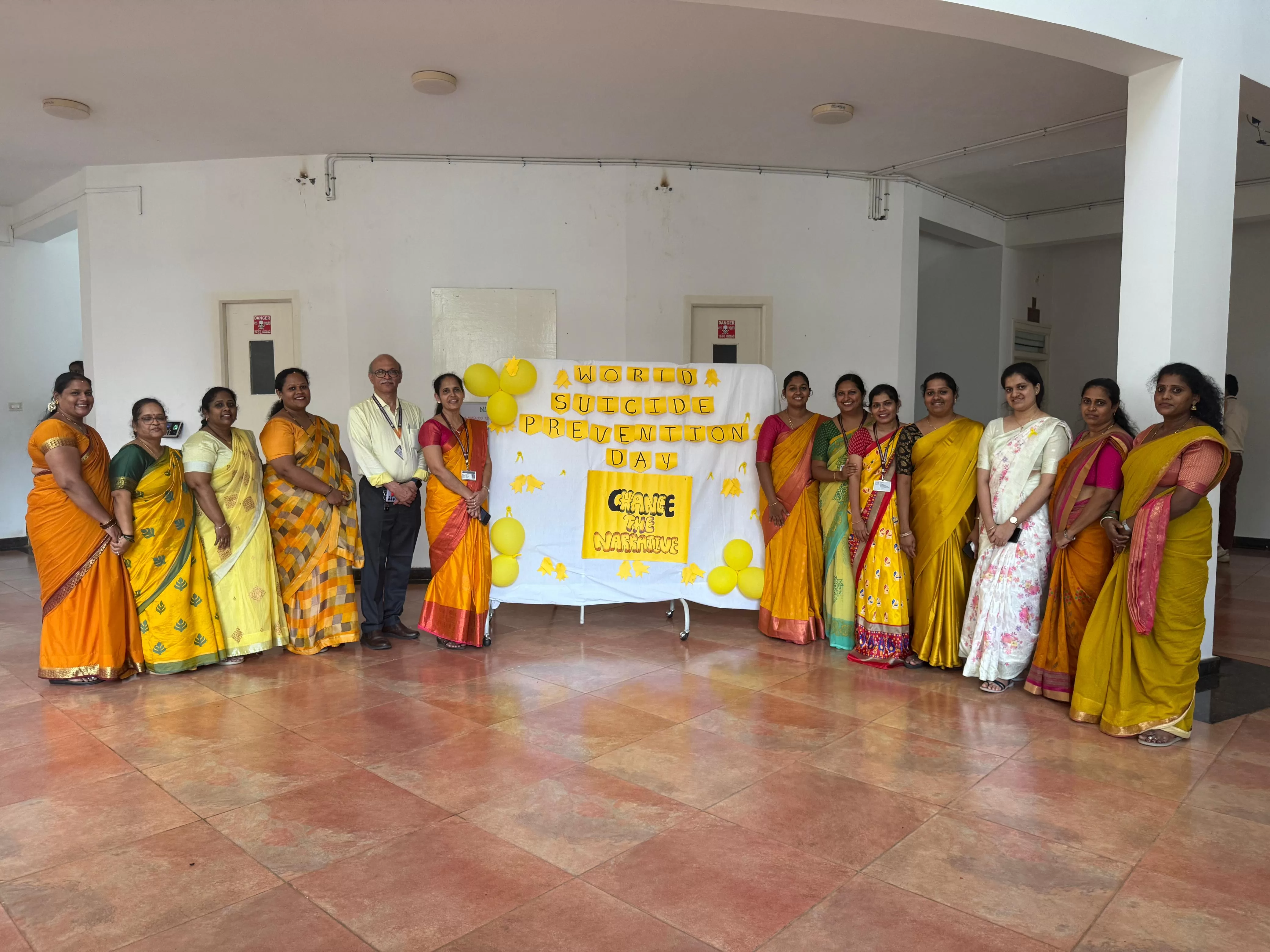
Suicide Prevention Awareness Program
A three-day Suicide Prevention Awareness Program at NIHS promoted mental health awareness, self-care practices, and community support among students.
A Suicide Prevention Awareness Program was organized at NIHS with the objective of promoting mental health awareness, emotional well-being, and suicide prevention among students. The program was designed to be empathetic, supportive, and student-friendly, ensuring active participation and meaningful engagement.
The program commenced with an introduction highlighting the importance of suicide prevention in today’s context. Emphasis was laid on creating awareness, reducing stigma, and encouraging students to seek help and support when needed.

Day 1: Yellow Hope
The first day of the program was conducted under the theme “Yellow Hope.” The campus was decorated with yellow balloons, ribbons, banners, and posters symbolizing positivity and life. Students and staff participated by wearing yellow attire to spread awareness and create a positive environment across the campus.
Day 2: Light Up for Life
The second day focused on the theme “Light Up for Life.” A solidarity walk was organized across the campus at 2:00 PM, with active participation from students and staff.
A central gathering was held where participants expressed unity with the message, “You matter. We’re here.” Students used mobile flashlights to symbolize hope, light, and life. This activity aimed to promote a sense of belonging and demonstrate collective support against stigma and isolation.
Day 3: Experiential Learning Activities
The third day was dedicated to experiential learning through interactive relaxation and wellness activities. Various zones were set up to introduce participants to coping strategies and self-care techniques.
The activities included guided breathing exercises, progressive muscle relaxation, visualization, mindfulness practices, yoga, art therapy (drawing and coloring), music therapy, nature walks, and self-help skill-building sessions.
Each activity zone was facilitated by trained volunteers who provided guidance and immediate support when required. Information regarding crisis intervention and available support systems was also shared with the participants.
The session successfully created awareness about mental health and suicide prevention among students. It encouraged open discussions, reduced stigma, and promoted healthy coping mechanisms. The program also reinforced the importance of community support and ensured that students felt valued and supported.
The Suicide Prevention Awareness Program was impactful and well-received by students and staff. It effectively conveyed the message that mental health matters and that help and support are always available. The program concluded on a positive note, encouraging everyone to continue spreading awareness and supporting one another.

Leave a comment
Your email address will not be published. Required fields are marked *